The Risks of AI-Generated Content and a 10-Point Pre-Publish Checklist
AI produces fast, but responsibility always stays with the business. Six real risks, their practical safeguards and a one-minute checklist to run before publishing.
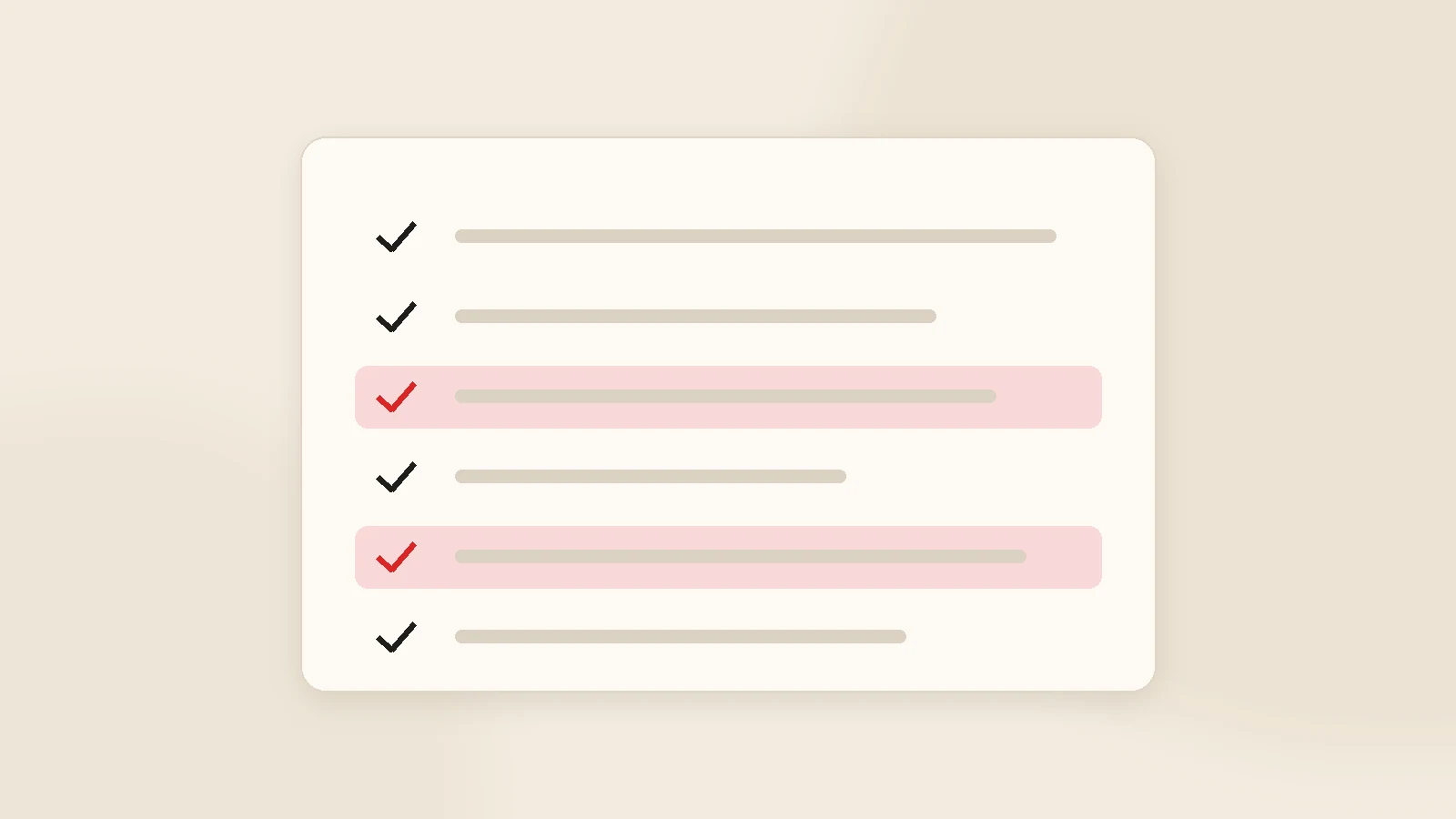
The real risk in AI content is not technical; it is accountability — everything published is a statement by your business. The six risks you will actually meet are false information, inflated claims, protected material, personal data, platform rules and brand inconsistency. None of them are solved during generation; they are solved by a pre-publish check. The good news: that check takes about a minute per post, and the ten-point list below systematises it.
AI sped up content production, and with it the speed at which mistakes can be made. A wrong price, an inflated claim or a badly timed post used to happen through one person's lapse. Now it can happen in an automated queue, repeatedly.
This guide lists the real risks without alarm or dismissal, gives the practical safeguard for each, and ends with the checklist you can attach to your approval flow.
1) False information
The biggest one. AI can produce an incorrect price, specification, date or statistic in confident, fluent prose — and fluency is exactly what makes the error easy to miss.
- Safeguard: verify prices, campaign terms, stock, delivery times, specifications and every number.
- Rule: no figure is published without a source. We apply this to our own content as well.
2) Inflated claims
AI drifts towards marketing hyperbole: "industry leader", "100% guaranteed", "certain results". These reduce credibility and, in regulated sectors such as health, finance and legal services, create genuine risk.
Safeguard: keep a banned-phrase list in the brand profile so generation avoids them from the start. The method is in a brand voice guide for AI content.
3) Protected and licensed material
- Recognisable brand logos and packaging
- Protected characters, film and television imagery
- Faces resembling identifiable real people
- Unlicensed music, particularly in short-form video
- Photographs pulled from the internet with unclear provenance
Safeguard: confirm that your tool's terms grant commercial use, and take music from the platform's own library.

4) Personal data
Keep customer details out of generation prompts. If you need an example, anonymise it ("a hotel client in Istanbul"). If you want to share a customer message or photo, get permission — the same applies to photographs of staff.
Sharing an inbox screenshot is a popular content type, but if the name, profile picture or phone number is visible, that is personal data. Where the stakes are meaningful, take proper legal advice for your jurisdiction.
5) Platform rules and labelling
Platforms apply their own policies on generated content and those policies change; labelling is often expected for realistic generated images and video. There are also limits on automated posting and automated messaging.
Safeguard: follow the current rules on the channels you use, be transparent when in doubt, and avoid unofficial tools that automate personal accounts — they carry a real risk of the account being blocked.
6) Brand inconsistency and bad timing
Two quiet risks: every post sounding the same, and publishing without regard to what is happening in the world. Both cost reputation and both are hard to notice from the inside.
- Variety: rotate at least five purposes and formats through a month.
- Timing: make sure you can pause the queue in one action. A cheerful scheduled post on a difficult day undoes a lot of goodwill.
The 10-point pre-publish checklist
- Are price, campaign terms and stock correct?
- Are specifications, measurements and dates correct?
- Is there a figure or percentage with no source?
- Any inflated claim or guarantee?
- Any risky health, legal or financial statement?
- Does the visual contain someone else's logo, character or photo?
- Is the music licensed appropriately?
- Is any personal data visible — names, numbers, screenshots?
- Does it match the brand tone; did a banned phrase slip through?
- Is the timing appropriate given the news?
Attach this to your plan screen or approval flow. A minute per post is far cheaper than an apology post.
Who is responsible?
To be plain: published content is a statement by the account owner, not by the software that produced it. "The AI wrote it" carries no weight with customers and none legally. That is why the approval step in an automated setup is not negotiable.
What to automate and what to keep human is covered in social media automation.
How we handle it in our own software: Postuby
Postuby is Gurizon's own AI-powered social media platform, and these safeguards are built into the flow:
- Generated content never publishes directly; it lands on the plan screen for approval.
- Banned phrases and tone rules from the brand profile are used during generation.
- Every post is editable before publishing — both copy and visual.
- Dates can be shifted and posts removed from the plan when circumstances change.
See the features page for the production and publishing side.
Conclusion
AI-generated content is not inherently riskier than human-written content; it is simply produced faster, and that speed makes checking mandatory. A banned-phrase list, an approval step, a factual check and a pausable queue remove most of the exposure.
If you would like us to review your current content flow with this lens, tell us about your accounts and publishing routine. Get in touch.
Frequently asked questions
What is the biggest risk with AI-generated content?
Do AI images create copyright problems?
Do I have to label AI-generated content?
Is it safe to put customer data into AI prompts?
Can AI content damage a brand?
How does Postuby reduce these risks?
Related guides

Build a Monthly Content Calendar with AI in One Hour
Asking "what should we post today" every morning is what kills social media accounts. Here is how to produce a month's plan in one sitting and approve it on one screen.
Read the guide
Creating Instagram Stories with AI: Seven Formats and a Weekly Template
A story is not a vertical post; it does a different job. How to generate story sequences with AI, seven ready formats and a weekly template that removes the daily decision.
Read the guideWant to put this into practice?
Tell us about your project and get a written, fixed-price proposal within 24 hours. No sales pressure — if we are not the right fit, we will say so.