A Brand Voice Guide for AI Content: The One-Page Brand Profile
If AI content does not sound like your brand, the problem is missing input, not the tool. Here is the one-page brand profile that fixes it permanently.
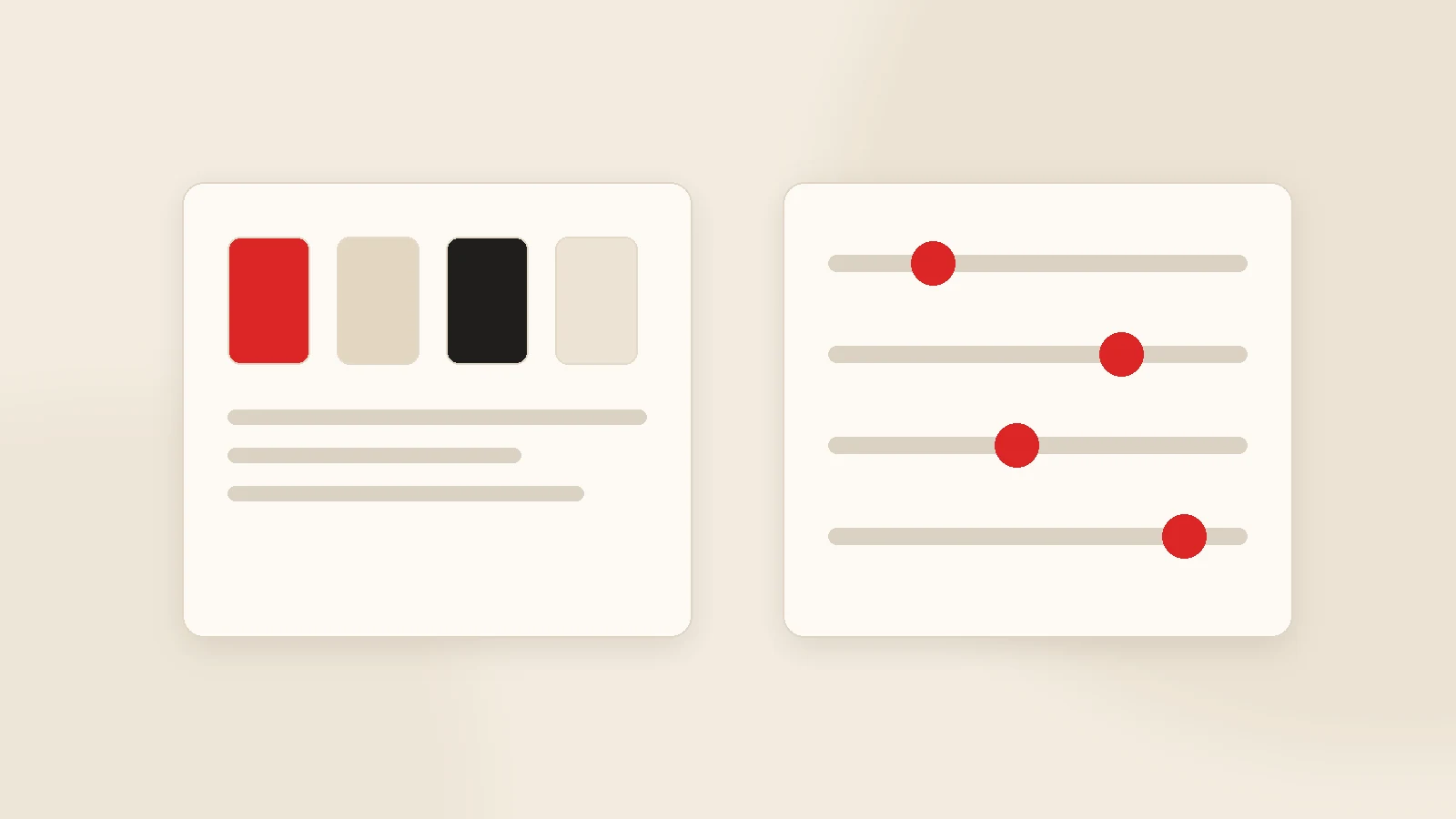
If AI-generated content does not sound like your brand, the cause is almost always the same: it was never told what your brand sounds like. The fix is a one-page brand profile used as input for every generation. It contains what you sell, who you sell to, your tone axes, form of address, banned phrases, fixed expressions and three to five sample posts. It takes an hour to write and pays back on every piece of content afterwards.
"AI copy all sounds the same, it feels robotic" is a common complaint. Yet the same tool produces noticeably different results once you describe your business to it. A model cannot produce better output than the information it was given; with no brand input it falls back on average marketing language — which belongs to no brand at all.
This guide covers how to define a brand voice permanently, what belongs on the one-page profile, and how to check consistency each month.
Voice versus tone
A simple distinction: voice is fixed, tone adapts. Your voice might be "plain, reassuring, understated" — that holds everywhere. Your tone is cheerful in a celebration post, serious in an apology, precise in a technical explanation.
Teach the model the voice first; specify the tone per piece.
The one-page brand profile
1. What you do
What you sell, where, at what price level, and what makes you different. One sentence.
2. Audience
Who buys, what they weigh up, what worries them.
3. Tone axes
Score 1-5 on three axes: warm ↔ formal, plain ↔ technical, bold ↔ measured.
4. Address
First person or corporate? Names or titles? Emoji, and how much?
5. Bans
Words you never use and promises you never make.
6. Fixed elements
How the brand name is written, fixed hashtags, tagline, your standard call to action.
7. Examples
Three to five posts you like, plus one or two counter-examples.
Filling in the tone axes
| Axis | 1 | 3 | 5 |
|---|---|---|---|
| Warm ↔ Formal | "Hey, something great today" | "Today we are introducing our new product" | "Our new product range is now available" |
| Plain ↔ Technical | "It lasts longer" | "It resists wear better" | "Surface hardness gives it high wear resistance" |
| Bold ↔ Measured | "The best in the industry" | "We have done this for 12 years" | "Let's work out together whether this suits you" |
Pick a number on each axis and write one example sentence beside it. That is far more usable input than "friendly but not over the top", which everyone interprets differently.
The banned list: fastest win
- "Industry leader", "number one", "the best"
- "100% guaranteed", "certain results", "always"
- "Unique", "revolutionary", "game-changing"
- Any unverified figure or percentage
- Sector-specific risky claims — particularly in health, finance and legal
We apply this to our own content too: if a number is going to be published, its source has to be clear. If not, the sentence does not exist.
Platform settings
| Platform | Sentences | Setting |
|---|---|---|
| Short, warm | Visual-led, measured emoji | |
| Longer, measured | Outcomes and process | |
| TikTok | Conversational | First two seconds decide everything |
| X | One idea, sharp | No decoration |
| Explanatory | Local and community framing |
The monthly consistency check
- Take the copy of your last ten posts. If you removed the brand name, would anyone know they were yours?
- How many times does the same opening pattern repeat?
- How many banned phrases slipped through?
Each answer points to a line in the profile that needs updating. A brand profile is a living document; the first version does not have to be perfect.
How it works in our own software: Postuby
Postuby is Gurizon's own AI-powered social media platform, and the brand profile sits at the centre of the product. Tone, address, banned phrases, colours, typeface and sample posts are defined once per brand and used as input for every generated caption and image.
Agencies and multi-location businesses keep a separate profile per brand, so several voices run side by side without bleeding into each other — see the agency setup. The production side is on the content generation page.
Conclusion
Teaching a brand voice to AI is not a project; it is an hour of writing. Describe what you sell, who to, how you speak, what you will never say, and show a few examples you like. That single page determines the quality of everything you generate afterwards.
Once the profile is written, scaling production is covered in how to create social media posts with AI. If you want help drafting the profile, get in touch.
Frequently asked questions
What is brand voice?
How do you teach a brand voice to AI?
Why are sample posts so effective?
Should tone change by platform?
Why keep a banned-phrase list?
How does Postuby store brand voice?
Related guides

Build a Monthly Content Calendar with AI in One Hour
Asking "what should we post today" every morning is what kills social media accounts. Here is how to produce a month's plan in one sitting and approve it on one screen.
Read the guide
Creating Instagram Stories with AI: Seven Formats and a Weekly Template
A story is not a vertical post; it does a different job. How to generate story sequences with AI, seven ready formats and a weekly template that removes the daily decision.
Read the guideWant to put this into practice?
Tell us about your project and get a written, fixed-price proposal within 24 hours. No sales pressure — if we are not the right fit, we will say so.