Custom CRM Cost vs SaaS Subscription: The Three-Year Maths
A subscription looks cheap and a build looks expensive — until you total three years. Here is where the lines cross, what the hidden costs are on both sides, and how to measure the return.
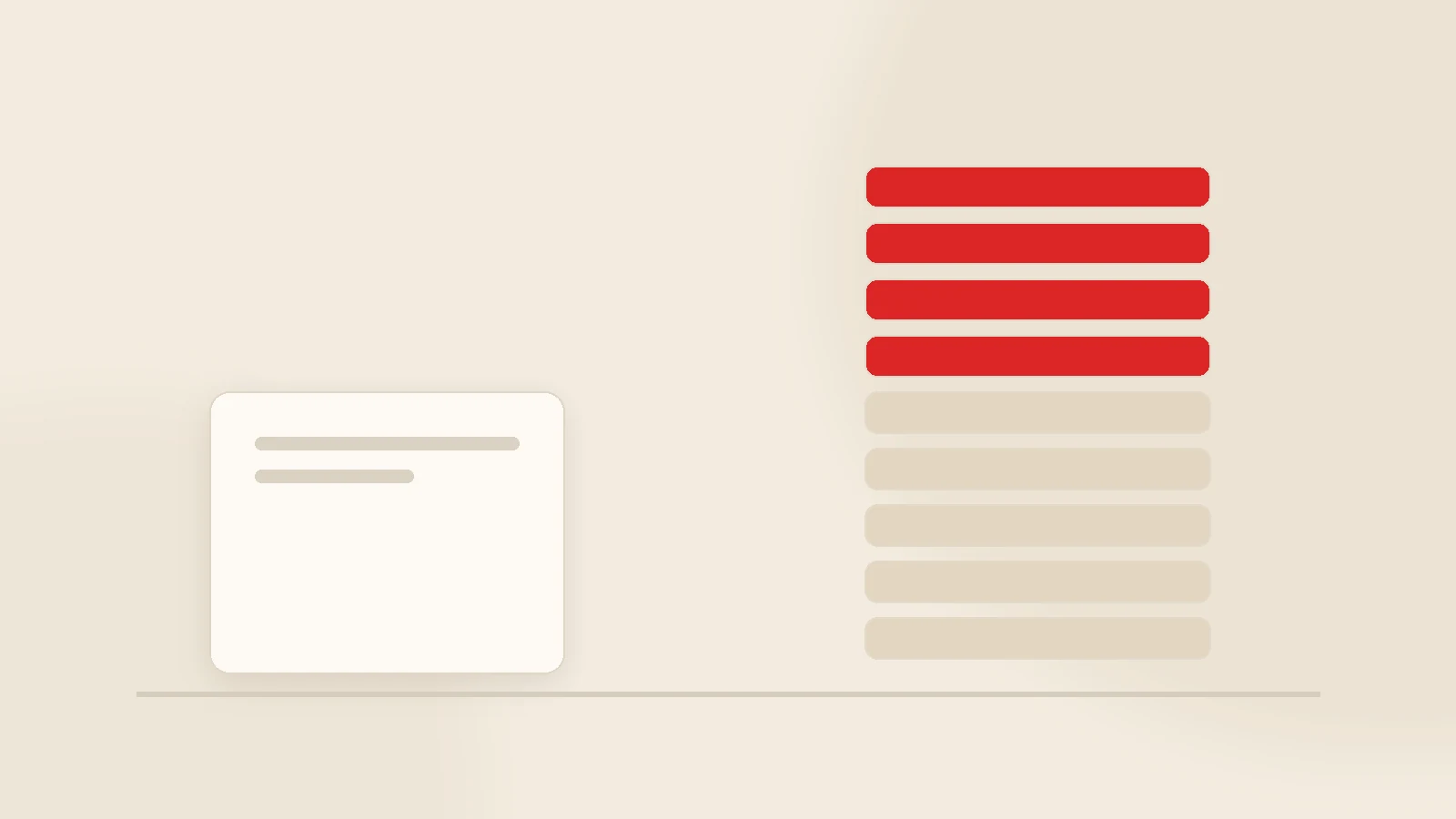
A custom CRM is a one-off build — published 2026 agency estimates put a basic one at roughly $15,000-$45,000 — plus annual hosting and maintenance. A SaaS CRM is billed per user per month and grows with your team. The crossover sits around this point: at five users a subscription usually wins over three years; past fifteen users a build usually does. Compare the three-year total, not the monthly price.
"Building a CRM is expensive" is true but incomplete. The true part: the first invoice is large. The incomplete part: with subscriptions the invoices never stop, and they grow with every new hire. Deciding without putting both on the same page is how companies end up regretting the choice in year three.
This guide breaks down both sides: what drives a build budget, what the annual costs really are, which items people forget, and how the three-year total looks at three different team sizes.
What a custom CRM budget consists of
| Item | What it covers | When you pay |
|---|---|---|
| Build | Discovery, design, development, testing, handover | One-off, staged |
| Infrastructure | Server, backups, domain, certificate | Annual |
| Migration and training | Data cleaning, import, onboarding the team | One-off, at the end |
| Continuity | Maintenance, new development, third-party services | Annual / as needed |
In a subscription those four collapse into one monthly invoice multiplied by your headcount. That is the structural difference: a build is priced by the size of the work, a subscription by the number of people.
What moves the build price
- Screen count. Eight screens and twenty-five screens are not the same project.
- Integrations. Each one — accounting, invoicing, e-commerce, messaging, banking — is separate work.
- Roles. "Everyone sees everything" is simple; dealer, subcontractor and regional-manager permissions are not.
- Business rules. Tiered discounts, area or weight-based pricing, approval chains all add time.
- Mobile. A responsive web interface and a published app store application differ substantially in cost.
- Data. One tidy spreadsheet versus six messy sources is a different piece of work.
Rates by region and engagement model are covered in custom software development cost.
Three-year comparison at three team sizes
The table below is an illustration, not a quote. It assumes a mid-range business plan at $60 per user per month and a build at $30,000 plus $3,000 a year for hosting and maintenance. Substitute your own figures — the shape is what matters.
| Team | Subscription (3 years) | Custom build (3 years) | Outcome |
|---|---|---|---|
| 5 users | ~$10,800 | ~$39,000 | Subscription clearly cheaper |
| 15 users | ~$32,400 | ~$39,000 | Close; other factors decide |
| 30 users | ~$64,800 | ~$39,000 | Build cheaper, and the gap widens |
The message is not the numbers but the gradient: the subscription line climbs with headcount, the build line is flat. So for a growing company the question is not "is a custom CRM expensive" but "in which year do we break even".
Six costs people forget
- Data cleaning. Getting messy lists into importable shape takes two to seven days on most projects.
- The learning dip. Productivity drops slightly for two or three weeks after launch. That is a real cost.
- Third-party services. WhatsApp Business API, transactional email, SMS — all metered.
- Post-launch refinement. Reserve part of the budget for what real use reveals.
- Internal time. Your project owner's hours are invisible but not free.
- Currency and price rises. On the subscription side, products priced in another currency change your annual plan for you.
Subscription-side traps — add-ons, tier upgrades to unlock a single feature, per-seat extras — are covered in CRM software for small business.
Measuring the return
CRM return is not measured in "savings" but in deals won and cash collected sooner. Note four numbers before you start:
- Quotes sent per month and win rate
- Minutes to prepare one quote
- Average days from invoice to payment
- Weekly hours spent on admin and chasing
Illustrative example: a company sending 25 quotes a month lifts its win rate from 24% to 28% — roughly one extra job per month. At an average job value of $4,000 that is about $48,000 of additional revenue a year. Add the cash-flow effect of collecting earlier and the hours returned to the team, and a $30,000 build sits in a very different light.
Your numbers will differ. What matters is deciding the measurement method before implementation; calculations made afterwards are always disputed.
Four ways to cut the budget
1. Narrow version one
Cover only the three things costing you the most money. Add the rest after real use.
2. Build on a core
Customising an existing core reaches the same outcome faster and cheaper than starting from scratch.
3. Defer integrations
Start with the one connection that genuinely disrupts your day; phase the others.
4. Use responsive web for mobile
A well-built web interface covers most field needs without app store overhead.
How Gurizon prices it
For most small and mid-sized companies we do not recommend building from scratch. We install the KurumsalCRM core — customer records, quoting, job tracking, payment follow-up and in-app messaging — and add your workflow on top. There is no per-user fee and the system runs on your own server, with standard implementation in about two to three weeks. See the CRM software page for what is included; for broader scope, custom software development. Our published hourly rates cover time-and-materials work.
The process itself, stage by stage, is in how to build a custom CRM.
Conclusion
Custom CRM is not expensive; it is expensive early. Subscriptions are not cheap; they are cheap at first. The single number that decides between them is your headcount three years from now. If the team will not grow and the process is standard, stay on a subscription. If it will, a build that breaks even in year two is usually the calmer decision.
Send us your user count and your current monthly software spend and we will run the three-year comparison for you — get in touch.
Frequently asked questions
How much does a custom CRM cost?
Is a subscription CRM cheaper than building one?
What are the annual running costs of a custom CRM?
What hidden costs should I plan for?
How do I measure the return on a CRM?
How can I reduce the build budget?
Related guides
Company Management Software: CRM, ERP and Accounting Explained
Company management software is not one product but a small group of them. Here is what each type actually solves, the order most growing businesses should buy in, and when "one system for everything" is a trap.
Read the guide
CRM Data Migration from Spreadsheets: A Practical Checklist
Most CRM projects stumble at migration, not at the software. How to decide what to move, clean a messy spreadsheet, import safely and keep the team on the new system for the first thirty days.
Read the guideWant to put this into practice?
Tell us about your project and get a written, fixed-price proposal within 24 hours. No sales pressure — if we are not the right fit, we will say so.